Recycling and Sustainability for Grass Cutting and Lawn Care
Our Commitment and Recycling Percentage Target
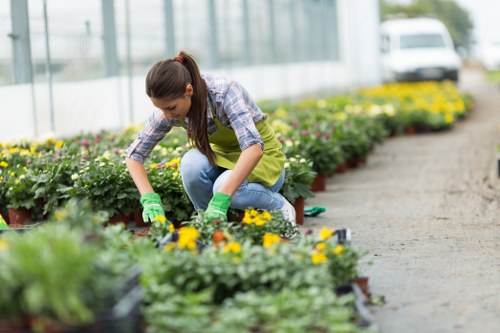 At the heart of our grass cutting and lawn mowing operations is a measurable sustainability plan. We have set a bold recycling percentage target of 75% diversion of green waste by 2030, aiming first for a 60% milestone by 2027. This target covers all elements of turf maintenance: from clippings produced by routine grounds cutting to hedge trimmings from larger civic sites. By tracking volumes collected, processed and diverted from landfill we ensure our turf maintenance and grass care activities contribute to a circular green economy.
Our strategy aligns with local borough waste separation approaches: many boroughs now provide separate brown bin collections for garden waste, green food recycling and household dry recycling. We work within those frameworks to ensure collections from residential grass maintenance contracts and public park mowing integrate seamlessly with municipal systems. By collaborating with council transfer stations and respecting local sorting standards we reduce contamination, increase compost yields and support consistent recycling performance across the area.
![A gardener and a young boy are working together in a well-maintained garden to plant or tend to a small flowering shrub with yellow blooms. The garden features a lush, neatly mowed lawn with vibrant green grass. In the background, there are various garden plants, including a hedge and some tall leafy shrubs, providing a dense, natural backdrop. The gardener, wearing a light blue shirt, jeans, and a straw hat, is kneeling on the grass with one knee while using a small hand trowel to handle the soil around the plant. The boy, dressed in a bright green T-shirt and jeans, kneels beside him, assisting with care. Nearby, gardening tools such as a watering can, a terracotta flowerpot, and additional small black containers are visible, indicating ongoing planting activity. The scene occurs outdoors in natural daylight, suggesting a calm and sunny day, ideal for gardening. This image exemplifies outdoor gardening activities typical for a residential garden in the [POSTCODE] or [TOWN] area, highlighting landscape maintenance services offered by Grass Cutting.](/pub/_photos/gardening/f1369374720.jpg) We make use of nearby transfer stations and accredited processing sites to close the loop on green waste. Materials are transported to local transfer stations, where garden cuttings are consolidated for composting or anaerobic digestion. Some fractions are directed to mechanical biological treatment for biomass energy where compost markets are limited. In all cases we follow local authority guidelines on source-separated green waste to maximise recovery and to meet our 75% target.
We make use of nearby transfer stations and accredited processing sites to close the loop on green waste. Materials are transported to local transfer stations, where garden cuttings are consolidated for composting or anaerobic digestion. Some fractions are directed to mechanical biological treatment for biomass energy where compost markets are limited. In all cases we follow local authority guidelines on source-separated green waste to maximise recovery and to meet our 75% target.
How We Divert Grass Clippings and Landscape Residues
On-site handling options play a major role in our recycling outcomes. For many grounds cutting jobs we use mulching mowers which finely chop grass so clippings are returned to lawns as a natural feed, reducing the need for chemical fertilisers. We also operate on-site compost bays for larger contracts where space allows, enabling us to convert hedge cuttings and leaf litter into usable compost for local landscaping projects. These approaches reduce transport emissions and increase the proportion of material reused locally.
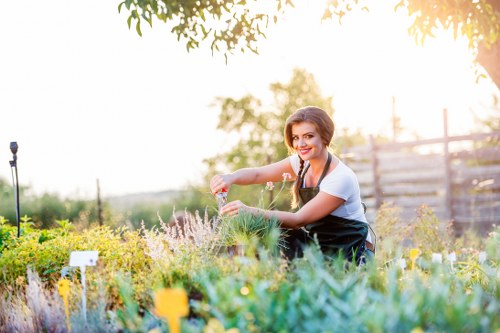 We partner with community organisations and registered charities that run allotments, urban farms and community gardens. Through these partnerships, usable compost, leaf mold and woodchip from our turf maintenance operations are donated to social projects rather than being treated as waste. These relationships are part of a formal redistribution network???materials unsuitable for composting are evaluated and repurposed as mulch or biomass feedstock, closing material loops and supporting local green initiatives.
Examples of our recycling activity include:
- Grass clippings: mulched in situ or sent to composting facilities;
- Hedge and shrub prunings: chipped for mulch or biomass;
- Leaves and street sweepings: collected with borough leaf-collection schemes and processed for leaf mould;
- Soil and turf: screened and reused on-site when feasible.
Local Transfer Stations, Partnerships and Low-Carbon Fleet
We maintain contracts with several local transfer stations to ensure green waste is processed quickly and transparently. These facilities act as hubs where material is assessed, sorted and dispatched to the right processing route. Working with transfer stations means we can provide accurate reporting on tonnes diverted and calculate performance against our recycling percentage target. We also adapt to borough-specific waste separation rules so collections are compliant with local municipal requirements.
![A neatly arranged outdoor gardening setup featuring three potted lavender plants with purple flowers and green foliage placed in black containers, situated on a wooden surface. In front of the plants are two terracotta pots, lacking plants, resting on a section of artificial green grass. Adjacent to the pots is a small wooden tray holding gardening tools, including a trowel and edger, with a pair of bright teal rubber gloves draped over the tray's edge. A yellow plastic bucket beside the tools contains black-handled garden hand tools, such as a small hand rake and a transplanting trowel. The scene is set against a light wooden fence, suggesting a well-maintained garden or backyard space suitable for lawn and garden care services provided by Grass Cutting in the local area, possibly near [POSTCODE] or in [TOWN], with natural lighting indicating a clear, dry day.](/pub/_photos/gardening/f1991245824.jpg) Our commitment extends to fleet decarbonisation. We operate a growing number of low-carbon vans and electric utility vehicles, and we deploy hybrid options where charging infrastructure is limited. Route optimisation software and combined collections reduce vehicle mileage and emissions during turf maintenance and lawn mowing rounds. This dual focus???reducing both waste and transport emissions???improves the overall sustainability of our grass maintenance services.
Our commitment extends to fleet decarbonisation. We operate a growing number of low-carbon vans and electric utility vehicles, and we deploy hybrid options where charging infrastructure is limited. Route optimisation software and combined collections reduce vehicle mileage and emissions during turf maintenance and lawn mowing rounds. This dual focus???reducing both waste and transport emissions???improves the overall sustainability of our grass maintenance services.
 Monitoring and continuous improvement are core to our plan. We publish internal annual reviews measuring recycling percentages, fleet emissions and partnership outcomes; targets are adjusted as technology, processing capacity and borough policies evolve. Through these measures???strong charity partnerships, close ties to local transfer stations, and a transition to low-carbon vans???we make sure that every grass cutting, greenspace maintenance and lawn care visit contributes to a healthier, more sustainable neighbourhood.
Final note: Our goal is simple: to turn routine grass care into a positive environmental action. By combining on-site mulching, local transfer station processing, community partnerships and a low-emission fleet, we aim to meet and exceed our recycling percentage target while supporting borough-level waste separation schemes and community green projects.

